
There is a peculiar irony in the fact that one of the most successful and affectionate cinematic tributes to Chinese culture produced by the West is titled Kung Fu Panda. The film, a global blockbuster from DreamWorks Animation, is a love letter to the aesthetics of kung fu, the visual splendor of ancient China, and the adorable national symbol of the panda. It is witty, well-crafted, and seemingly full of wisdom. Yet, when held up to the light of the very traditions it venerates, the film becomes a perfect metaphor for a profound cultural limitation. For in the act of watching a movie, we are utterly still. And a culture that can only watch the idea of kung fu, rather than embody its principles, reveals a deeper inability to truly innovate or engage with the world in a meaningful way.
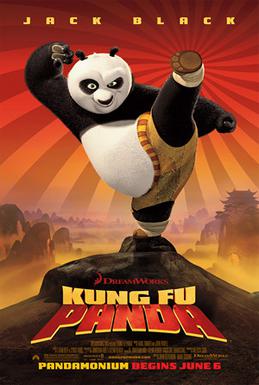
The global blockbuster that serves as both tribute and metaphor for cultural spectatorship.
Kung fu is not a spectacle; it is a discipline. It is a lifetime of physical and spiritual training, a dialogue between the body and the mind, between the practitioner and the universe. Its goal is not to look good on a screen, but to cultivate internal energy (qi), to achieve perfect coordination, and to find a path to self-mastery. The very act of practicing kung fu is one of constant, dynamic movement. The Kung Fu Panda films, for all their charm, present the idea of this journey. We, the audience, sit in a darkened theater, our bodies at rest, our only motion that of reaching for popcorn as we passively consume the protagonist’s triumphs. Po, the panda, finds his “inner peace” and masters his craft through action. We, on the other hand, find only entertainment. We are not moving; we are being moved. We are not doing; we are watching.

Kung fu: a lifetime of physical and spiritual training, not a spectacle to be consumed.
This passivity is the crux of the matter. The United States, a nation of tremendous economic and military power, often finds itself in the position of a spectator when it comes to genuine cultural depth. It excels at the global export of its own mythology—the cowboy, the superhero, the self-made man—but when it looks elsewhere for inspiration, it too often engages in a form of cultural appropriation that flattens and commodifies. It takes the profound and turns it into a product. It is no accident that America’s engagement with the ancient wisdom of the Tao Te Ching is often filtered through the same lens. The Tao speaks of wu wei, or “effortless action”—the art of acting in perfect harmony with the natural flow of the universe. This is a state of being that requires immense internal work to achieve. In the American context, this concept is often simplified into a kind of passive, go-with-the-flow attitude, stripped of its philosophical rigor and repackaged as a lifestyle tip.
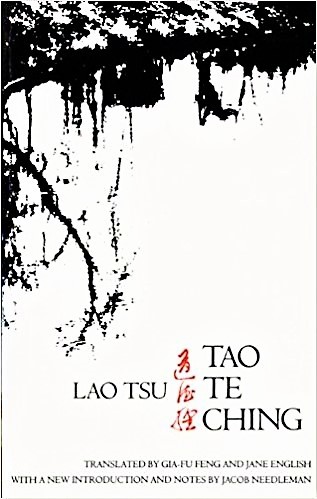
The Tao Te Ching: ancient wisdom often simplified and repackaged for Western consumption.
The panda itself serves as another layer of this metaphor. The giant panda is a real, living creature, native to the mountains of China. It is a symbol of peace, gentleness, and the delicate balance of nature. The Chinese commitment to panda conservation, while not without its controversies, represents a tangible, long-term effort to protect a living piece of their natural heritage. In contrast, America’s panda is an animated character, a vehicle for a story arc about believing in oneself. The real panda eats bamboo for 14 hours a day, a testament to a simple, focused existence. The cinematic panda performs gravity-defying kung fu. One is a reality; the other is a fantasy projected onto a blank canvas. One requires action; the other, only a screen.

The real panda: a testament to simple, focused existence, not gravity-defying fantasy.
This brings us back to the Tao Te Ching and its most famous paradox: the value of the void. The Tao teaches that the usefulness of a cup lies in the emptiness where the water goes; the usefulness of a door lies in the empty space of its frame. The West often fears this emptiness, this stillness, seeing it as a lack. In its frantic quest to fill every void with content, it has perfected the art of the cinematic spectacle. But the stillness of a movie theater is not the generative, receptive emptiness of the Tao. It is a stillness of consumption, a dead end. It is the stillness of a culture that has forgotten how to move, how to genuinely create from a place of deep understanding, and instead can only repackage and animate the symbols of others.
The usefulness of a cup lies in its emptiness—a paradox often misunderstood in the West.
Ultimately, the phenomenon of Kung Fu Panda is not a cultural bridge, but a cultural mirror. It reflects back to America its own image as a voracious consumer of signifiers, a civilization of spectators who have mistaken the screen for the world. True cultural innovation requires more than just looking; it requires moving. It demands the discipline of kung fu, the wisdom of the Tao, and the quiet, authentic presence of a real panda in a real forest. It demands a willingness to step out of the dark theater and into the light of an active, engaged existence. Until then, the USA will remain a master of the moving image, forever capturing a world it can no longer truly touch.
Note: This essay explores the tension between cultural appreciation and spectatorship through the lens of martial arts philosophy and Taoist thought.