
My journey through martial arts in Toronto began not with a desire to fight, but with a curiosity about movement and the ways different disciplines frame the problem of conflict. From the solitary, meditative forms of Tai Chi to the cooperative dynamics of Aikido, and finally to the demanding physicality of Brazilian Jiu-Jitsu, each art offered a distinct language for the body and the mind. This is a record of that education.
2010: Tai Chi at The School of Rising Sun Toronto
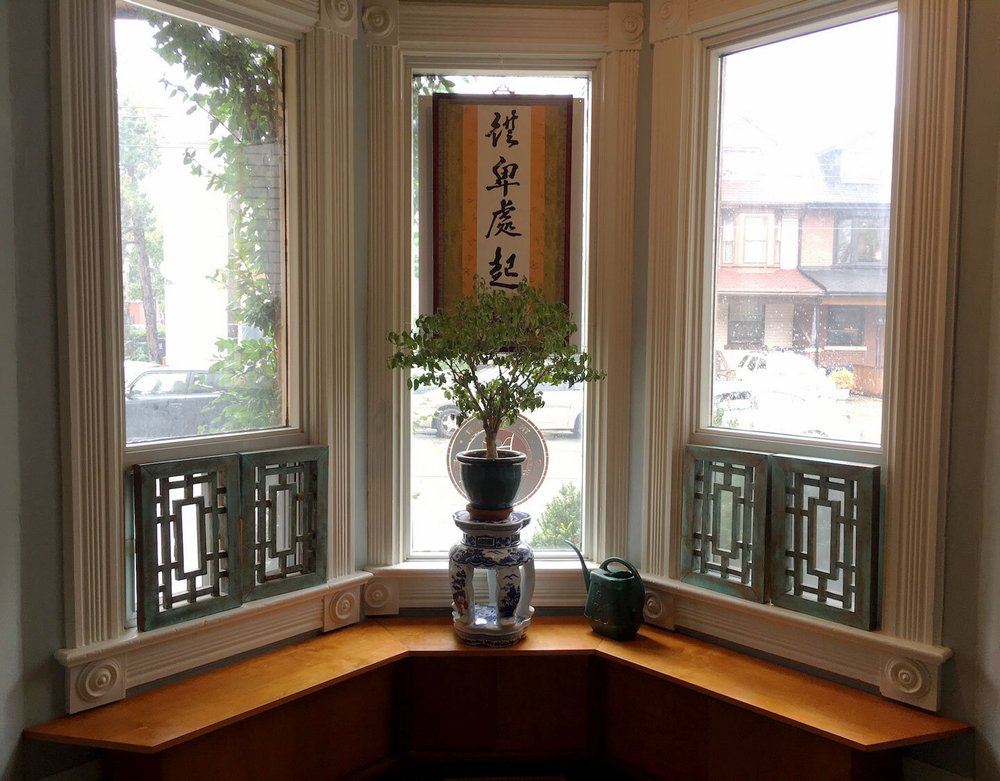
The slow, deliberate movements of Tai Chi demand a focus that is as much neurological as it is physical.
My introduction began with the Yang-style long form at the Rising Sun School on Bathurst Street. The school emphasized a practical, health-oriented approach, focusing on posture, breath, and the mechanics of slow movement.
The common romanticization of Tai Chi as an ancient, mystical art obscures its traceable and pragmatic history. The art we recognize today is often credited to Chen Wangting, a 17th-century retired guard in Henan province who, around the 1670s, synthesized existing martial exercises with philosophical and health practices from Taoism and Traditional Chinese Medicine. He wasn’t seeking esoteric power; he was creating a comprehensive system for cultivation and defense. The signature gentleness of the popular Yang style came later, pioneered by Yang Luchan in the 19th century. His innovations (higher stances and slower, more continuous movements) made the art more accessible and emphasized its health benefits, which is the form that eventually spread globally.
This demystified perspective was reflected in my classes. The instructor spoke less of magical “qi” and more of intent, skeletal alignment, and neuromuscular control. The challenge was in the sustained precision: maintaining a low stance without tension, shifting weight with absolute control, coordinating each turn with a breath. It was a lesson in investing effort into relaxation, a paradox that trained focused awareness. The goal was not to accumulate force, but to eliminate wasteful resistance within one’s own body first.
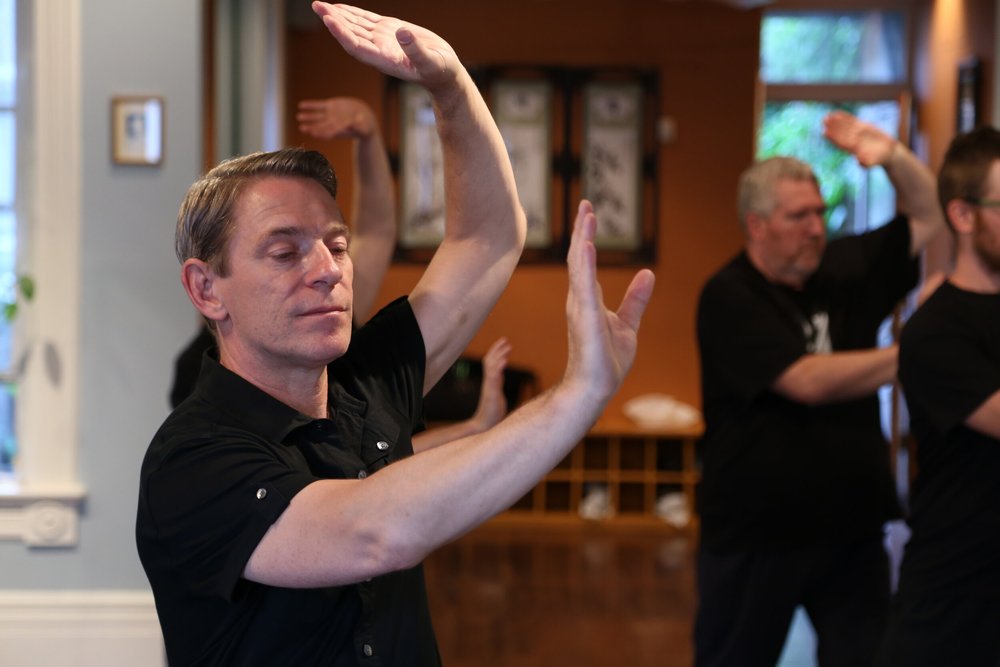
Learning in a circle at Rising Sun, where the focus was on internal mechanics rather than external application.
After a year, I felt a need for a practice that involved a partner, a dynamic response to another’s energy. The principles of Tai Chi (centering, yielding, directing force from a stable root) were a solid foundation. But I sought a art where those principles were tested not just in my own balance, but against another’s motion. This led me to a dojo whose very name promised engagement with the present moment.
2010-2012: Aikido at Naka Ima

The tatami mats of Naka Ima, where the philosophy of blending was practiced through repetitive, cooperative technique.
Aikido, “the way of harmonizing energy,” presented a philosophical appeal: the idea that conflict could be resolved by blending with and redirecting an attack, ideally without severe injury to either party. The dojo, Naka Ima (“In the Present Moment”), was a dedicated space on Liberty Street where this ideal was pursued through relentless, partnered practice.
The art’s modern origins are decidedly 20th century. Its founder, Morihei Ueshiba (1883-1969), was a master of several classical Japanese jujutsu styles, most significantly Daitō-ryū Aiki-jūjutsu. His unique synthesis began in the 1920s and 30s, heavily influenced by his spiritual involvement with Ōmoto-kyō, a neo-Shinto religion. This religious perspective shaped his core philosophy: that true martial prowess was about overcoming one’s own aggression and reconciling conflict. The name “Aikido” itself wasn’t formally adopted until 1942. This history frames Aikido not as an ancient feudal art, but as a modern, intentional creation: a martial art designed for a postwar world, built from older combat systems but aiming for a different end.
My training was intensive, three to four nights a week, often for three hours at a time. We drilled the basic vocabulary: irimi (entering), tenkan (turning), the art of receiving a technique through safe falling (ukemi). The practice was deeply cooperative. As uke (the one receiving the throw), your job was to attack with committed intent and then follow the technique safely to the ground. As nage (the one performing), your task was to use the attacker’s momentum, not muscle, to guide them. The lessons were in sensitivity, timing, and the geometric management of space and force.

Techniques practiced at Naka Ima emphasized circular redirection and control over brute strength.
The dojo community was intense. My most memorable teachers, Ramin and Dino, were stern, instilling a discipline that made the techniques sink in through sheer repetition and exacting standards. I helped paint and construct the new change rooms when the dojo was forced to relocate; first from Liberty Village to Lansdowne and St. Clair, an early sign of instability. The politics of the community and the strain of these relocations eventually frayed my connection.
A highlight was a grueling summer camp, where days of sunrise-to-sunset practice taught me about endurance and the discomfort that accompanies deep learning. I earned a 4th kyu rank, a marker of progress, but the constant upheaval demonstrated a harsh lesson: that the harmony sought on the mat could be fragile off it. The final move to a location far north on Dufferin severed my practical tie to the practice.
2012: BJJ at Toronto BJJ

The grounded, visceral reality of BJJ training, where technique and endurance are tested under full resistance.
Seeking a new physical challenge, I stepped onto the mats at Toronto BJJ. The contrast was immediate and humbling. Despite two years of Aikido and dedicated cycling and weight training, the warm-ups alone (a relentless series of burpees, shrimps, and sprawls) pushed me to my limit. Once, I even had to sprint to the bathroom to be sick. It was a raw introduction to a different kind of honesty.
This art, too, has a modern, cross-cultural lineage that dispels myth. Its seeds were planted by Mitsuyo Maeda, a Kodokan judoka who traveled the world and settled in Brazil in 1914. He taught “Kano jiu-jitsu” (an early name for Judo) to locals, including Carlos Gracie. The revolutionary adaptation came from Carlos’s brother, Hélio. Of smaller stature and less physical power, Hélio refined the techniques to rely overwhelmingly on leverage, weight distribution, and ground fighting (ne-waza), creating a system where a weaker person could control and submit a stronger one. This was not a ceremonial art; it was forged in the “Gracie Challenges,” public matches against fighters of other styles intended to prove its effectiveness.
On the mats, philosophy was secondary to applied physics and physiology. The concept of “rolling” (live sparring) was central. Here, the cooperative element of Aikido vanished, replaced by fully resisted, problem-solving combat. You learned because you were constantly placed in bad positions (mounted, pinned, caught in a choke) and had to work your way out. The lesson was in incremental survival, the cultivation of calm under direct pressure, and the very tangible application of technique against struggling opposition.
I had committed to a year but lasted only a few months. The combination of the intense physical toll, university studies, and a long commute was unsustainable. It was an expensive lesson in understanding my limits and the importance of sustainable commitment. While I didn’t continue, it taught me more about my physical and mental thresholds than any previous practice.
Reflections on a Practical Journey

Three arts, three different answers to the same fundamental questions of movement and conflict.
This journey was less about collecting techniques and more about encountering different frameworks for thought and action. Each art functioned as a distinct cognitive tool.
Tai Chi trained a deep, internal awareness and the discipline of slow, purposeful mastery. It framed conflict as something to be managed first within oneself, by achieving a poised, efficient calm. Its transferable lesson is the value of foundational, solo practice: the work that no one sees but which makes all other work possible.
Aikido trained dynamic sensitivity and a cooperative approach to opposition. It framed conflict as a relational problem that could be resolved through blending and redirection, protecting all parties. Its lesson is in the power of entering a system (an argument, a project, a crisis) and seeking to redirect its energy toward a resolution rather than meeting its force head-on with your own.
Brazilian Jiu-Jitsu trained pragmatic problem-solving under relentless pressure. It framed conflict as a test to be endured and solved through superior positioning, leverage, and tenacity. Its lesson is the non-negotiable value of testing your skills under genuine resistance, and the confidence that comes from knowing you can survive and think clearly in difficult, close-quarters situations.
None of these arts offered a complete truth, but each corrected the biases of the others. Tai Chi’s solo focus needed Aikido’s partnership. Aikido’s idealized harmony needed BJJ’s gritty resistance. Together, they formed a more complete picture: that preparedness comes from cultivating internal calm, practicing cooperative strategy, and being tested under fire.
The journey through these dojos in Toronto was ultimately about learning how to learn through the body. The skills are not how to throw a punch or perform a wristlock, but how to cultivate patience, how to engage with an opposing force intelligently, and how to remain composed when you are, quite literally, pinned to the mat. These are the transferable lessons that remain long after the specifics of the forms fade.
Note: This article synthesizes my experiences across multiple martial arts disciplines, highlighting the historical context and practical lessons of each.