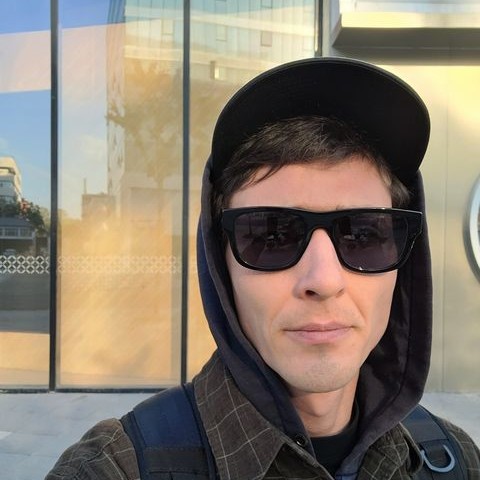
A journey through traditional healing, dashed hopes, and the return to familiar ground.
My path into shiatsu began with a promise that never materialized. The school I attended in Toronto—originally known as the Shiatsu School of Canada and later evolving into the Acupuncture and Integrative Medicine (AIM) Academy—assured us that regulation was coming soon, that our credentials would be recognized and valued in the Canadian healthcare system. Founded in 1986, the school had been operating for decades and had built a reputation as one of Canada’s leading institutions for traditional healing practices. This promise of legitimacy and professional opportunity drew me into a three-year program of study, where I learned the art of healing touch, the meridian system, and the subtle energies that flow through the human body. But the regulation that was supposed to validate our training never came, leaving many of us in a professional limbo.
The school itself was a place of focused learning located downtown Toronto, right next to Chinatown & vibrant Kensington Market, where Eastern healing traditions were taught with both academic rigor and practical application. I was drawn to the philosophy of shiatsu—that healing comes through the practitioner’s awareness, centeredness, and connection with the client. It was a practice that combined physical technique with mindfulness, requiring both technical skill and spiritual development.
The Promise of Regulation

The building where I spent three years learning the fundamentals of shiatsu and traditional healing.
When I enrolled in the shiatsu program, the school administration was confident that provincial regulation was imminent. They spoke of professional recognition, insurance coverage, and integration with mainstream healthcare. This assurance made the significant investment of time and money seem worthwhile. The instructors were experienced practitioners who had built their careers in an unregulated environment, but they believed that formal recognition was just around the corner.
The curriculum was comprehensive, covering anatomy and physiology, traditional Chinese medicine theory, meridian pathways, and hands-on practice. We learned to read the body’s signals, to apply pressure with precision and sensitivity, and to approach each client with both technical knowledge and intuitive awareness. The practice of shiatsu requires the practitioner to be grounded, centered, and present—qualities that were as much a part of our training as the physical techniques.

The precise application of pressure is fundamental to shiatsu practice.
Graduation and Reality
Upon completing the program, I was excited to begin practicing professionally. The school had connections with various clinics, and I was fortunate to be hired by one of my teachers at a clinic in Toronto’s Chinatown. This seemed like the perfect opportunity—a chance to practice what I had learned while working alongside experienced practitioners who understood the tradition.
The clinic was located in the heart of Toronto’s Chinese community, a place where traditional healing practices were respected and sought after. The building itself was old, with narrow hallways and small treatment rooms. Many of the clients were elderly Chinese immigrants who had been coming to this clinic for years, trusting in the healing traditions that had been passed down through generations.

Toronto’s Chinatown, where I began my professional shiatsu practice.
The Evolution of the School
What I didn’t fully appreciate at the time was the evolution of the school itself. The institution I attended had originally been known as the Shiatsu School of Canada, founded in 1986, and was later known as “the Shiatsu and Acupuncture School” before evolving into the Acupuncture and Integrative Medicine (AIM) Academy. During my time there, the school offered a 40-hour Beginner Shiatsu course for Registered Massage Therapists, but the focus was increasingly shifting toward acupuncture and Traditional Chinese Medicine.
The school had grown significantly over its 40+ years of operation, training over 800 confident graduates who had treated over 200,000 patients. The campus, located downtown Toronto next to Chinatown and Kensington Market, featured 5000 square feet of space with bright classrooms with natural light for theoretical and practical learning, a student clinic for clinical practice with real patients, an herb room containing 300+ Chinese herbs for hands-on study, and a cozy student lounge for relaxation and community building.
The Struggle in Chinatown
Despite the promising start, the reality of working in the Chinatown clinic was challenging. Most of my clients came through Groupons and other discount services, which meant that my compensation was minimal. The clinic’s business model relied heavily on volume rather than quality, and the discounted rates made it nearly impossible to earn a living wage.
I found myself treating multiple clients per day, often with insufficient time for proper assessment and treatment. The Groupon clients were typically looking for quick fixes rather than the deeper healing that shiatsu could provide. Many were skeptical of the practice, having tried it only because it was cheap and convenient.

The intimate setting of a traditional shiatsu treatment room.
The financial strain was significant. After three years of intensive study and the investment in my education, I was barely covering my basic expenses. The promised professional future in regulated shiatsu seemed more distant than ever. I began to question whether I had made the right choice, whether the path I had chosen was sustainable.
Return to Familiar Ground
After some time at the Chinatown clinic, I was let go during a seasonal reduction in staff. It was winter, and the uncertainty of my financial situation became acute. I realized that I needed to return to something more stable, something that could support me while I figured out my next steps.
This led me back to Urbane Cyclist, the bike shop where I had worked before pursuing shiatsu. The return felt both like a step backward and a homecoming. The familiar rhythm of bicycle repair, the tangible satisfaction of fixing something broken, the community of cyclists and mechanics—it all provided a stability that my shiatsu practice had not.

Returning to the familiar tools and rhythms of bicycle repair provided stability during uncertainty.
Reflections on the Path
Looking back, my journey through shiatsu school and the Chinatown clinic taught me valuable lessons about following one’s passion while maintaining practical awareness. The practice of shiatsu itself was deeply rewarding—I learned to be present with others in their pain and healing, to apply touch with intention and awareness, and to understand the body as an integrated system of energy and form.
The experience also taught me about the gap between educational promises and professional reality. The regulation that was supposed to legitimize our practice never materialized, leaving many graduates in a difficult position. The business model of discount services like Groupons made it challenging to practice quality healing work while earning a living.

The complex system of meridians and energy pathways that form the theoretical foundation of shiatsu.
Despite the challenges, the knowledge and skills I gained in shiatsu continue to influence my approach to health and wellness. The principles of centeredness, awareness, and connection that are central to shiatsu practice have applications beyond the treatment room. They inform how I approach my work, my relationships, and my own physical and mental well-being.
The return to bicycle repair was not a failure but a necessary adjustment. It provided the stability I needed while I continued to explore how to integrate the healing knowledge I had gained with a sustainable livelihood. Sometimes the path forward requires taking a step back to gain perspective and strength for the next phase of the journey. The school that began as the Shiatsu School of Canada in 1986 and evolved into AIM Academy continued its mission of training practitioners in traditional healing arts, even as the focus shifted from shiatsu to acupuncture and TCM.